
Suggested Praise Songs:
Resources for Family Worship (with Children):
- The Ark and the Tabernacle – A Faith Kids Bible Story Video – Lesson for Kids
- “I Am A C-H-R-I-S-T-I-A-N” + 30 MINS of Sunday School Christian Kid Videos – Song for Kids
- Power Shuffle | Kingdom Rock VBS Music Video | Group Publishing – Song for Kids
- Nothing Is Impossible by Planetshakers performed by Grace Chapel Kids – Song for Kids
- Discussion Questions for Children & Youth arelocated in the section after Explanation, Meditation, and Prayer (at the end of this email/blog).
Explanation:
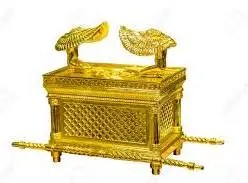
God first gives instructions about the sacred objects to be placed inside the Tabernacle. The Ark of the Covenant was also called the “Ark of the Testimony” or the “Ark of the Law.” It was a rectangular box made of acacia wood (v. 10), overlaid inside and out with pure gold and surrounded with a gold molding (v. 11). Four gold rings were to be attached to its four lower corners (v. 12), and two poles made of acacia wood overlaid with gold were to be inserted into these rings (vv. 13–15). This was to allow the ark to be swiftly carried on the shoulders during travel.
Inside the ark, the “tablets of the testimony” (the stone tablets inscribed with the Ten Commandments) were to be placed (v. 16).
A mercy seat (atonement cover) made of pure gold was to be placed on top of the ark (v. 17). On each side of the mercy seat, cherubim (the Hebrew word keruvim refers to winged creatures symbolizing the heavenly realm) were to be fashioned to face one another (vv. 18–19). The cherubim and the mercy seat were to be made of one piece. Their wings were to spread upward and overshadow the mercy seat (v. 20). With the mercy seat placed above and the tablets of the covenant inside, the ark of the covenant would be complete (v. 21).
In verse 22, the pronoun “you” is in the second person singular form. Primarily, this “you” refers to Moses, but afterward, the high priest assumed that role. The Ark of the Covenant was to be placed in the Most Holy Place (the Holy of Holies) within the Tabernacle, where only the high priest could enter and meet with God face to face.
If constructed according to these instructions, the Ark of the Covenant would have the following appearance:
Meditation:
The Ark of the Covenant symbolizes the “distance” between the holy God and sinful humanity. God gathered the Israelites at Mount Sinai but warned them not to cross the set boundary—doing so would result in death. This was an explicit declaration: sinful humans must not violate God’s holiness. Yet, sinful humanity deeply needs God. That is why those who recognize their limitations seek to draw near to Him.
In this way, the Ark represents the existential condition of humanity, which desires to be close to God yet is unable to approach Him directly. For those who long for God’s mercy and wish to live according to His will, God graciously chose to meet with His people indirectly—through the Ark and the mediation of the high priest.
For this reason, the Ark of the Covenant was like the “pupil” of the Tabernacle. What truly made the ark the Ark of the Covenant were the mercy seat (atonement cover) placed on top, and the tablets of the testimony placed inside. The mercy seat signifies that humans are sinful before God and can only stand in His presence through His grace. Yet God is not satisfied with merely washing away our sins. If we have received forgiveness, we must then live in holiness according to His will. The tablets of the testimony represent God’s expectations for those who have received His grace. The people of Israel, chosen by God, were called to be a kingdom of priests who would proclaim God’s love and grace to all nations.
The Ark of the Covenant was lost long ago. By the time of Jesus, the ark placed in the temple was a later replica, and even that disappeared when the Jerusalem temple was destroyed in AD 70. Jesus said that the destruction of the temple occurred because He had come as the actual temple. The temple and the ark were foreshadowings of the redemptive work that Jesus Christ would fulfill, so their disappearance was inevitable.
As the author of Hebrews explains, Jesus offered an eternal and perfect atonement in the “temple not made by human hands.” Through Him, we now have an everlasting mercy seat. And He has given us the Holy Spirit so that we may also have the eternal tablets of the testimony within us. In the grace of Jesus Christ, we now dwell in the Most Holy Place.
Prayer:
Lord, because You have atoned for our sins, we now come boldly before the throne of grace. You have given us the Holy Spirit so that we may be reborn and live in holiness. Though we are still sinful beings, You have made us dwell in the Most Holy Place. For this grace, we give thanks—again and again. Amen.
Discussion Questions for Children & Youth:
Key Point: God is holy, and we are sinful—but through Jesus, we are invited into God’s presence. The Ark of the Covenant reminded the Israelites of God’s mercy and His expectations for them. Today, Jesus is our mercy seat, and through Him, we live close to God and are called to live holy lives.
- For Preschool-Elementary
- What do you think it means that God is holy?
- Why did only the high priest get to go near the Ark in the Old Testament?
- How does Jesus help us be close to God today?
- For Youth
- Why do you think God created “boundaries” around His presence in the Old Testament?
- How does the idea of Jesus as our eternal mercy seat change the way you pray or worship?
- What does it look like to live a “holy life” in your everyday routine at school or home?
 사귐의 소리 2025
Leave a comment